 Shannon
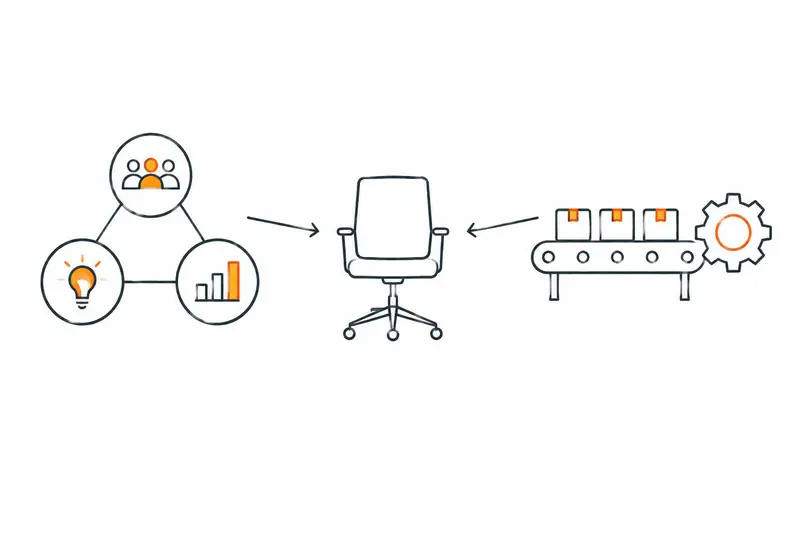
You have an Integrator. They work hard, care deeply about the business and spend their days solving problems. Yet as the Visionary, you still feel like you are carrying the company alone.
You need a counterpart who can work through priorities with you, hold the Leadership Team accountable and turn the vision into coordinated execution. But your Integrator is busy handling client escalations, production schedules, staffing gaps and delivery deadlines.
They may be doing an excellent job leading Operations. The problem is that the business also needs them to lead the whole company.
The EOS Integrator role and the Head of Operations role have different accountabilities. The Integrator leads execution across the major business functions. The Head of Operations leads product or service delivery. One person can hold both seats, but only while they have the capacity and capability to fulfil both.
If the title changed but the workload did not, you may have a capacity gap rather than a commitment problem.
EOS Integrator vs. Head of Operations: what is the difference?
The distinction is scope, not seniority or effort. One seat brings the business together. The other makes sure the business delivers what it promises.
What the EOS Integrator owns
The Integrator harmoniously integrates the major functions, holds the Leadership Team accountable and leads day-to-day execution across the company. That includes resolving cross-functional issues and keeping decisions aligned with company priorities and overall results.
From our finance-first perspective, that means looking beyond departmental activity to understand what decisions do to revenue, cash and profit. A delivery solution that damages margin is still a company issue. So is a sales commitment the business cannot fulfil profitably.
The Integrator is not simply the company's most experienced problem-solver. They need the authority and capacity to lead the leaders who own those problems.
What the Head of Operations owns
The Head of Operations owns the function responsible for delivering the product or service. Depending on the business, that can include client delivery, production, scheduling, fulfilment, quality, capacity and operational staffing.
Their focus is reliable delivery: the right work, at the agreed standard, within the resources available.
The exact accountabilities belong on your Accountability Chart. They will differ between a professional services firm, a manufacturer and a distribution business.
Where the two seats meet
Consider a hypothetical situation: Sales wants to promise a faster turnaround to win a client. Operations is already at capacity. Finance is concerned about the overtime cost.
The Operations leader explains what delivery requires and what options are feasible. The Integrator brings the functions together to resolve the trade-off in the interests of the whole company.
When one person holds both seats, they need to make that shift deliberately. Defending the delivery schedule and deciding the company-wide trade-off are not the same responsibility.
Can one person be both Integrator and Head of Operations?
Yes, combining seats can be practical in a smaller business. There may not yet be enough work or financial capacity to justify two senior leaders.
Often, the person who becomes the Integrator was already leading Operations. They know the business, understand the people and have earned the Visionary's trust. They add company leadership without handing delivery to anyone else.
For a period, that can work. But the Accountability Chart should still make the two seats distinct, even if the same name appears in both. Define the structure the business needs before deciding who fills it.
As the company grows, each seat becomes more demanding. More clients, employees and complexity create more operational work at the same time that company-wide leadership needs more attention.
A person can occupy two seats on the Accountability Chart. That does not give them two people's capacity.
Combining seats should be a deliberate arrangement you review, not a permanent assumption nobody questions.
Five signs the dual-seat structure is costing you
1. Delivery urgency keeps displacing Integrator work
Client escalations and staffing gaps demand an immediate response. Coaching leaders, reviewing performance across functions and addressing recurring issues can appear less urgent.
So the company leadership work gets postponed. Your Integrator finishes the day having worked hard, but with little capacity left to perform the Integrator function.
2. The Visionary still has no execution counterpart
You technically have an Integrator, but you are still connecting the departments, chasing commitments and making the trade-offs.
The Integrator may be just as frustrated. They are carrying two demanding seats while hearing that they are not doing enough.
Before treating this as a performance problem, ask whether you have created enough room for them to succeed. Also check whether they have the mandate to lead execution, not just the title.
3. Operations gets attention at the expense of the whole business
The Integrator's view can become shaped by the function consuming most of their time. Revenue and Finance receive less leadership attention. Cross-functional issues linger.
Decisions may solve today's delivery problem without fully considering the implications for sales, cash or profit. The company needs someone with enough time and perspective to assess the whole picture.
4. The Operations team cannot function without them
If your Integrator still resolves every delivery issue, the Operations team has limited opportunity to develop ownership.
They cannot elevate because the team needs them. The team keeps needing them because responsibility never fully transfers.
A handover needs more than a new reporting line. It requires clear outcomes, decision authority and support. Our guide to delegating effectively without micromanaging explains how to transfer that ownership.
5. Growth adds pressure without adding leadership capacity
The business wins more work, but each new client or order adds to the Integrator's workload. Revenue may grow while margins, leadership effectiveness and the Visionary–Integrator relationship come under strain.
Hiring is not automatically the answer. But neither is assuming the same person can absorb every increase in complexity indefinitely.
Start with a Same Page Meeting about capacity
Use a Same Page Meeting to examine the issue together. Approach it as a shared business problem, not a case against the person holding both seats.
Bring evidence: the calendar, recurring responsibilities, delayed decisions and examples of work that keeps coming back to the Visionary.
Work through these questions:
- How much time is actually going toward each seat?
- Which Integrator accountabilities are being delayed or missed?
- Which operational responsibilities genuinely require this person?
- What decisions could move to someone else with clear authority and support?
- What does the Visionary need from their Integrator counterpart?
- What additional capacity would make the biggest difference?
“I need to spend more time in the Integrator seat” is difficult to act on. Identifying the recurring delivery responsibilities consuming most of the week gives you something concrete to change.
Assess capability alongside capacity. In EOS language, consider whether the person Gets it, Wants it and has the Capacity to do it for each seat. Capacity is more than an empty calendar. The question is also whether they can carry the complexity and demands of the role.
For the underlying EOS tools, see EOS Worldwide's explanations of the Accountability Chart and Same Page Meeting.
How to create capacity without leaving Operations exposed
1. Define the two seats separately
Write the major accountabilities for the Integrator and Head of Operations seats. Identify the decisions each owns and the outcomes each must deliver.
Do not start by rearranging titles around the current people. Start with what the business needs, then assess who can carry each seat.
2. Decide which seat this person should ultimately own
Being excellent at Operations does not automatically mean someone wants or is suited to the Integrator role. Equally, an effective Integrator may need to stop being the default delivery expert.
Have the conversation directly. Is the long-term goal to elevate this person into the Integrator seat, keep them leading Operations or retain a combined role while the business can support it?
3. Transfer a defined set of operational responsibilities
Identify an internal leader who can take ownership, or assess whether you need to recruit. Hand over a coherent area of responsibility rather than scattering tasks across people who still need approval for everything.
Specify the outcomes, authority, escalation boundaries and support. The original leader should not remain the invisible owner of every decision.
4. Build a transition plan with visible milestones
Set dates and observable outcomes. For example, the new Operations owner might lead the delivery review, make staffing decisions within agreed boundaries and resolve routine escalations without routing them back.
Use quarterly Rocks where appropriate, but keep the plan specific to the handover. “Elevate the Integrator” is an intention. A defined responsibility transferred to a named owner is progress.
5. Check whether company leadership actually improves
Review both sides of the change. Is Operations maintaining delivery quality? Is the Integrator now resolving cross-functional issues, coaching leaders and keeping commitments visible?
The Scorecard, Rocks and Level 10 Meetings can help you see results and surface issues. Do not measure success only by whether someone's calendar looks less crowded.
If the workload has reduced but the Integrator accountabilities remain unmet, investigate capability, clarity and authority rather than assuming more time alone will solve it.
When Integrator coaching or fractional support makes sense
If an internal leader is ready for the Integrator seat but needs help developing the capability, Co-Pilot Integrator coaching can support that transition. The work is to strengthen their leadership, not create a second person they must ask before every decision.
Our EOS Integrator coaching case study explores an engagement focused on closing an Integrator capacity gap.
If the business needs company-wide execution leadership before an internal person can carry the seat, fractional Integrator support may be another option. That still needs a clear mandate and a plan for lasting internal capability.
Neither option removes the need to decide who owns Operations. Adding support without clarifying the structure can leave the original bottleneck intact.
Frequently asked questions
Is an EOS Integrator the same as a Head of Operations?
No. The Integrator leads execution across the major business functions and holds the Leadership Team accountable. The Head of Operations leads the delivery function. One person may hold both seats, but the accountabilities remain distinct.
Is an Integrator the same as a COO?
There can be substantial overlap, but the title alone does not establish the role. A COO may lead the whole business or focus primarily on Operations, depending on the company. Compare the actual accountabilities, decision authority and scope with what your EOS Integrator seat requires.
When should you separate the Integrator and Operations seats?
Consider separating them when one person's workload consistently prevents either seat from delivering its accountabilities. Repeatedly postponed leadership work, delivery dependence on one person and cross-functional decisions returning to the Visionary are reasons to review the structure. There is no single revenue or headcount threshold that fits every business.
Does freeing up time automatically make someone an effective Integrator?
No. Time is necessary, but so are capability, desire for the role, clear expectations and real authority. Assess the seat and the person, then determine whether the answer is a workload change, development support or a different assignment.
Two seats need a deliberate plan
A hardworking Operations leader is not failing simply because two demanding seats exceed one person's capacity. But leaving the arrangement unexamined has a cost.
The Visionary keeps carrying execution. The Integrator stays buried in delivery. The team never gets the room or authority to grow.
Start with the Accountability Chart and an honest capacity conversation. Decide what the business needs, which seat this person should own and what must move for that to become real.
If you have an Integrator on paper but still feel like the execution backstop, the Visionary Unstuck Workshop is a practical next conversation.