 Shannon
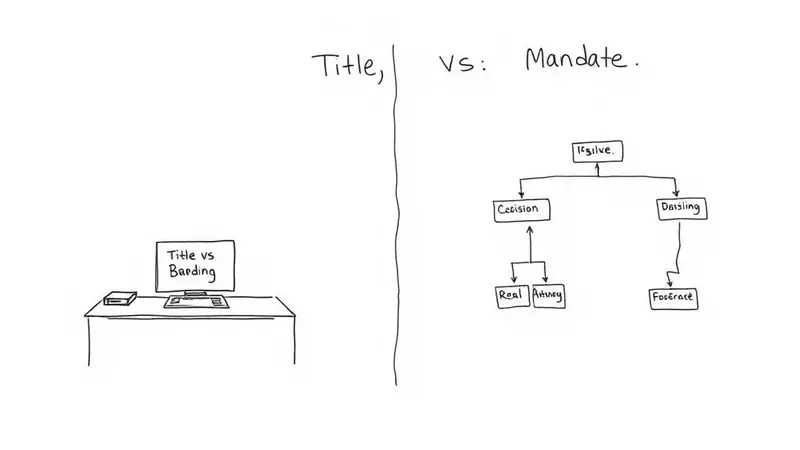
One of the biggest misconceptions about EOS is that once you've filled the Integrator seat, the system will naturally begin to work.
Unfortunately, that's not how it happens.
We've worked with companies that have been running EOS for years. The accountability chart is complete. Weekly L10 meetings are happening. Quarterly Rocks are set. The scorecard is being updated every week.
On paper, everything looks healthy.
But underneath the surface, execution is still struggling.
Recently, we worked with a company that had been running EOS for two years. They had an Integrator. They were following the tools. Yet the founder still felt like they carried the weight of every important decision.
The business wasn't stuck because EOS wasn't working.
It was stuck because the Integrator had the title, but not the mandate.
Everything Looked Right
The leadership team held weekly L10 meetings.
Rocks were assigned each quarter.
The scorecard was updated consistently.
The Integrator facilitated meetings and kept projects moving.
But something wasn't adding up.
Every meaningful decision still found its way back to the founder.
The leadership team completed their Rocks, but nobody connected them back to the business outcomes they were meant to achieve.
The scorecard became an administrative exercise instead of a leadership tool. Numbers were reviewed, but they weren't driving conversations or decisions.
The founder believed they had delegated execution.
The Integrator believed they were leading execution.
Neither was actually true.
The Real Problem Wasn't the Person
When we started diagnosing the situation, one issue stood out immediately.
The Integrator had never truly been given ownership.
They had responsibilities.
They had meetings to run.
They had projects to coordinate.
But they had never been given explicit authority to make the decisions that come with owning execution.
Whenever uncertainty appeared, decisions naturally drifted back to the founder.
Not because the founder didn't trust the Integrator.
Because the boundaries had never been clearly defined.
The founder was still unintentionally acting as the Integrator.
What We Changed
The solution wasn't replacing the Integrator.
It wasn't introducing new EOS tools.
It wasn't creating more meetings.
Instead, we focused on three foundational changes.
We Defined What "Owning Execution" Actually Meant
The founder and Integrator sat down for an honest conversation.
- What decisions belonged to the Integrator?
- Which decisions required consultation?
- Which decisions remained with the founder?
For the first time, both people left the conversation with the same understanding.
We Created a Decision Rights Map
One of the most valuable exercises any Visionary and Integrator can complete is mapping decision ownership.
- 1Who decides without asking?
- 2Who recommends?
- 3Who simply needs to be informed?
Removing ambiguity eliminates hesitation.
When people know they have permission to decide, they start leading differently.
We Rebuilt the Scorecard
The previous scorecard measured activity.
The new scorecard measured outcomes.
Even more importantly, every metric was directly owned by someone on the leadership team.
Instead of reviewing numbers that couldn't be influenced, leaders began discussing metrics they could actually improve.
The scorecard became a decision-making tool rather than a reporting exercise.
What Happened Next
The changes weren't dramatic overnight.
But they were significant.
Within 90 days, the founder stopped attending the weekly L10 meeting.
The Integrator owned it.
The leadership team began identifying and solving issues before they ever reached the founder.
Conversations became faster.
Decisions became clearer.
Accountability became stronger.
Six months later, the company launched two entirely new service lines.
The founder wasn't driving either initiative.
The leadership team was.
That's what a functioning Integrator seat is designed to create.
The Seat Is More Than a Title
Many companies believe they have an Integrator problem.
Often, they don't.
They have a mandate problem.
An Integrator cannot own execution if they haven't been given the authority to lead it.
Titles don't create accountability.
Clear decision rights do.
Trust does.
Structure does.
If your EOS implementation feels like it's running, but the Integrator seat still isn't truly holding, don't assume you've hired the wrong person.
More often than not, the missing piece isn't capability.
It's clarity.
And that's a problem that can absolutely be solved.