 Shannon
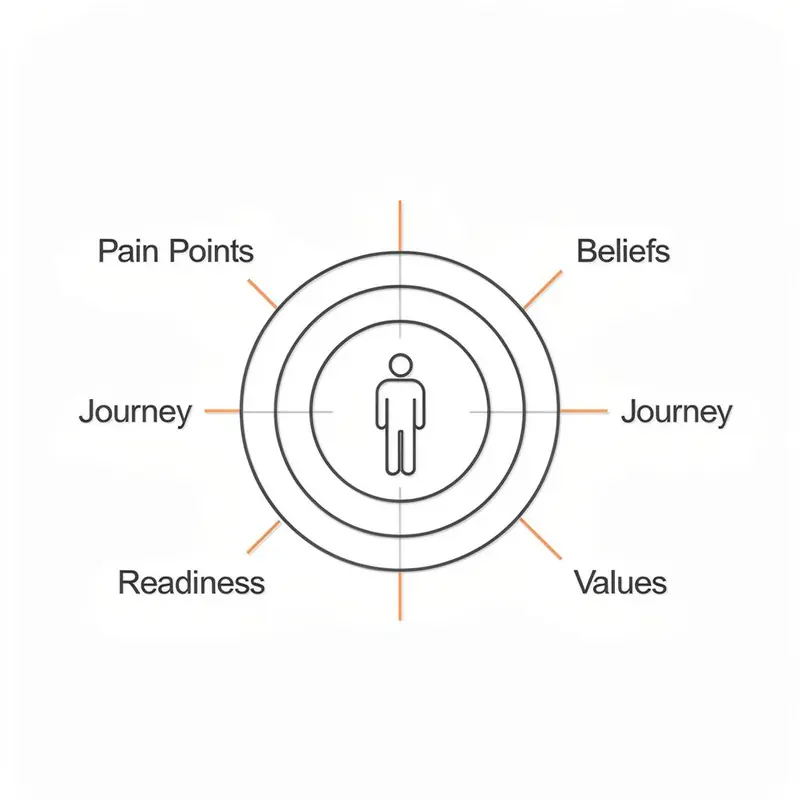
There's a section on the V/TO (Vision Traction Organizer) that we see businesses struggle with again and again: defining their target market in a way that actually drives results.
And the reason is completely understandable.
Most businesses don't start with a clearly defined target audience. They start with a visionary who has an idea, a deep belief in that idea, and a network willing to listen. Growth happens through relationships, referrals, and momentum.
But eventually… that momentum slows. And when it does, leadership teams often look at their scorecards, see missed revenue targets or lagging indicators, and ask:
"What's going wrong?"
As Integrators, we start asking why. And quite often, we land here:
Your messaging isn't landing because your target audience isn't clearly defined.
The Problem with "High-Level" Target Markets
Most V/TOs describe the target audience in ways that sound like this:
- North American businesses
- $2M–$20M in revenue
- 10–50 employees
- Professional services, construction, tech, etc.
That's not wrong. It's just not enough.
Because none of that tells you:
- What keeps your client up at night
- What they've already tried (and failed at)
- What they actually value when making decisions
- Why they would choose you over any other option
And without that depth, your marketing becomes generic. Generic messaging leads to:
- Lower conversion rates
- Longer sales cycles
- Attracting the wrong clients
- And ultimately… stalled growth
What Changes When You Go Deeper
When you truly understand your target audience, everything sharpens:
- Your messaging becomes specific and resonant
- Your sales conversations get shorter and more effective
- Your marketing attracts the right people
- Your team knows exactly who they are solving for
And perhaps most importantly:
Your entire organization aligns around delivering value to the same type of client.
What This Looks Like in Practice (OpsLab Example)
At OpsLab, we don't have one target audience. We have different audiences for each of our core services.
1. Fractional Integrator Clients
On paper, they might look like:
- EOS-running companies across North America
- Various industries
- Remote-friendly
But that's not what actually defines them.
What defines them is their moment in the journey:
- The visionary is sitting in both the Visionary and Integrator seat and has hit a ceiling
- They either can't do the Integrator role at the level required… or they simply don't want to anymore
- They feel the weight of the business and often feel alone in solving its biggest challenges
- They deeply value partnership, experience, and expertise
- Sometimes they've been burned before and are cautiously evaluating their next move
That's who we're speaking to.
Not "a $10M business." A human being at a very specific inflection point.
2. Co-Pilot (Integrator Coaching)
This audience looks different.
- The visionary already has an Integrator
- That Integrator might be new or hitting a ceiling
- The visionary sees potential… and wants to unlock it faster
What matters here is:
- They value getting it right, not just getting it done
- They are willing to invest in developing their people
- There may be urgency or impatience, but also commitment
Again, this is about mindset and moment, not just metrics.
3. Pathfinder Program
This is where it gets even more nuanced.
- The visionary is still sitting in both seats
- They are not yet ready (financially or structurally) for a Fractional Integrator
- But they are deeply self-aware
They know:
- They need accountability
- They don't want to do this alone
- They want out of the Integrator seat as quickly as possible
They are:
- Highly committed
- Open to feedback
- Willing to do the work
This is a very different buyer than the others… even if their company size overlaps.
The Shift: From Demographics to Journey
The biggest unlock for most leadership teams is this:
Stop defining your target audience by what they look like. Start defining them by where they are in their journey.
Because people don't buy based on demographics. They buy based on:
- Pain
- Desire
- Readiness
- Beliefs
- Past experiences
When you understand those things, your marketing stops feeling like marketing… and starts feeling like clarity.
How This Connects Back to EOS
If your Scorecard numbers aren't where they should be, and your Rocks aren't driving the traction you expected…
This is a place to look. Because unclear target audience leads to:
- Weak messaging
- Misaligned priorities
- Ineffective marketing spend
- And ultimately, missed results
And the fix isn't "more marketing." It's better clarity.
Reflection Prompts to Define Your Target Audience
Use these prompts with your leadership team. Slow down. Go deeper than feels comfortable.
1. Understand the Journey
- What was happening in our client's world right before they came to us?
- What had they already tried that didn't work?
- What finally pushed them to take action?
- What were they thinking and feeling at that moment?
- What risks did they feel they were taking by choosing us?
2. Identify Exceptional Clients
Think of your absolute best clients.
- What makes them exceptional?
- How do they show up differently than others?
- What do they value most about working with us?
- What beliefs or mindsets do they have that make the relationship work so well?
- What was true about their business or situation when they engaged us?
3. Learn from Wrong-Fit Clients
This is just as important.
- Which clients have felt heavy, frustrating, or misaligned?
- What specifically made them a poor fit?
- Where did expectations break down?
- What would have needed to be true for them to become a great client?
- Were there early signals we ignored?
4. Clarify Buying Triggers
- What specific event or realization causes someone to look for a solution like ours?
- What makes them say "now is the time"?
- What objections or hesitations do they typically have?
- What finally gives them confidence to move forward?
5. Align on Messaging
- If our ideal client read our website, would they feel like we truly "get" them?
- Are we speaking to their situation… or just describing our services?
- Where are we being too generic?
- What language do our best clients actually use to describe their challenges?
Final Thought
If your growth has stalled, don't immediately assume you need a new strategy, new channels, or more spend.
Start here.
Because when you get crystal clear on who you serve and why they choose you, everything else becomes easier:
- Marketing
- Sales
- Delivery
- Even team alignment
Clarity is what creates traction. And this is one of the most overlooked places to find it.