 Shannon
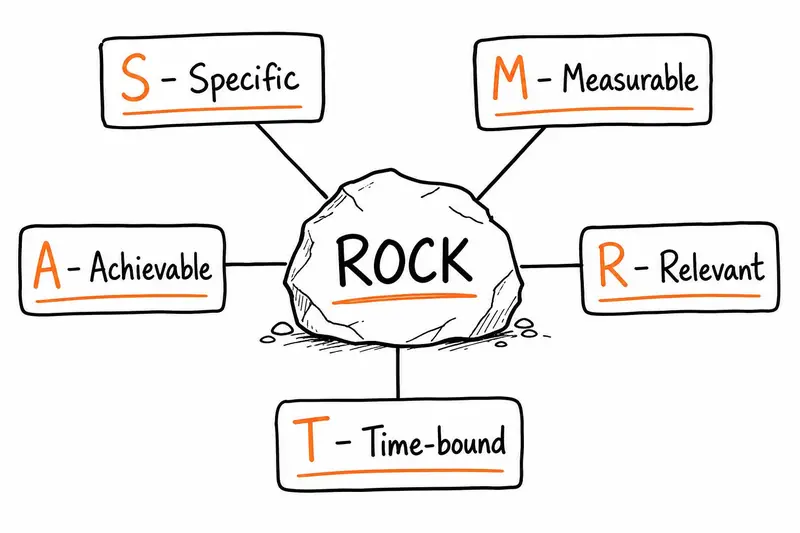
Most Rocks Don't Fail in Week 12. They Fail in Week 1.
One of the most common breakdowns we see on leadership teams is this: a rock gets assigned, everyone nods, and the owner goes off to execute. Week after week in the L10, it's reported as "on track… on track… on track…" until suddenly, it's not.
By the end of the quarter, one of three things happens:
- The rock isn't complete
- It gets rushed and delivered at a mediocre level
- Or no one is actually clear on what "done" even means
This is not just a leadership team problem.
This is an Integrator opportunity.
A strong Integrator does not just assign rocks. They operationalize them.
Immediately after quarterly or annual planning, each rock owner should build a clear milestone plan. Not a vague outline. A real, step-by-step breakdown of what it will take to get that rock over the line.
And here is where the Integrator steps in.
Your role is to pressure test that plan before execution ever begins.
Start with the end in mind.
Is the rock written clearly enough that anyone could understand what success looks like? Is it truly specific and measurable?
Too many rocks sound important, but are impossible to execute because they are vague from the start.
An example of poorly worded rock
"Improve onboarding process."
What does "improve" mean? For who? By when? What is actually changing? How would the leadership team know it was successful?
A stronger rock sounds more like:
"We have launched a standardized employee onboarding process for all new hires by September 30, including documented SOPs, 30-60-90 plans, and manager accountability checkpoints."
Or another common example:
Bad rock: "Fix inventory issues."
Good rock: "We have reduced inventory stockouts from 14% to under 5% by end of Q3 through weekly forecasting process and updated purchasing thresholds."
The difference is not more words. The difference is clarity. A good rock makes execution easier because the outcome, ownership, and definition of done are clear from day one.
Then dig into the milestones.
- Are the right people involved at the right stages?
- Have key stakeholders and decision makers been accounted for?
- Are approval points built in, or are they assumed?
- Is the timeline realistic based on capacity, not optimism?
This is where most rock plans tend to break down. When Integrators skip this step, they unintentionally allow false confidence to build. Everything looks "on track" because no one has defined what track actually is.
But when this step is done well, it mitigates risk.
- Rock updates become real
- Risks get surfaced early
- Course corrections happen in real time
- And completion at the end of the quarter becomes predictable
The difference between a completed rock and a rushed or failed one is rarely effort.
It is clarity and alignment. And it is the Integrator doing the work upfront to ensure both are in place.
At OpsLab Integrators, we help visionaries and leadership teams operationalize EOS, strengthen the Integrator function, and build execution rhythms that actually hold.
Whether you need a Fractional Integrator, support developing your internal Integrator, or help improving quarterly execution, we would love to connect.