 Nina
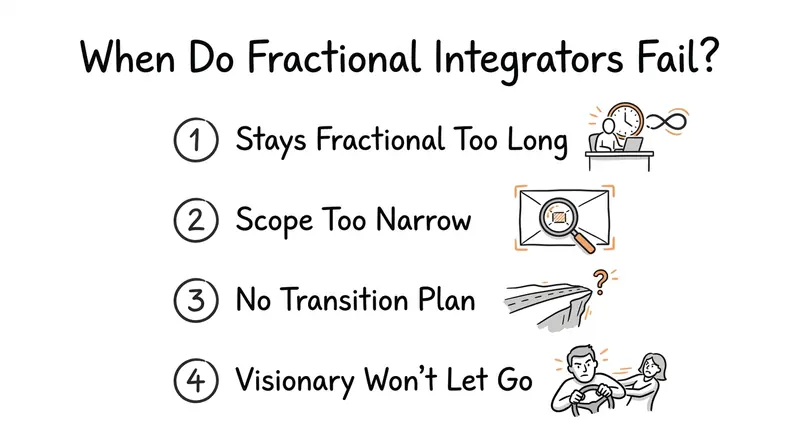
The Most Common Failure Modes
1. The Integrator seat stays fractional for too long. Fractional support can stabilize execution in the short term, but the role ultimately requires deep immersion. To fully lead the business, build trust with the team, and carry the context of the company, the seat needs a dedicated full-time Integrator.
2. The scope is too narrow. Some fractional Integrators are hired to run meetings and manage projects. But the real job is to own execution across the entire business. If the scope is limited, the impact will be too.
3. There's no transition plan. The best Fractional Integrator engagements are designed to end. If there's no plan for who takes over the seat, the company becomes dependent on outside help.
4. The Visionary won't let go. Even with an Integrator in place, some Visionaries continue to make every decision. This undermines the role and signals to the team that the Integrator doesn't have real authority.
What Works Instead
The engagements that succeed share a few common traits:
- Clear scope with full authority over execution
- Deep enough involvement to build real relationships and context
- An explicit transition plan from day one
- A Visionary who is genuinely ready to step back from operations
The Fractional Integrator model works, but only when the conditions are right. If you're considering it, make sure you're setting the engagement up for success, not just checking a box.