 Shannon
The Title Without the Authority
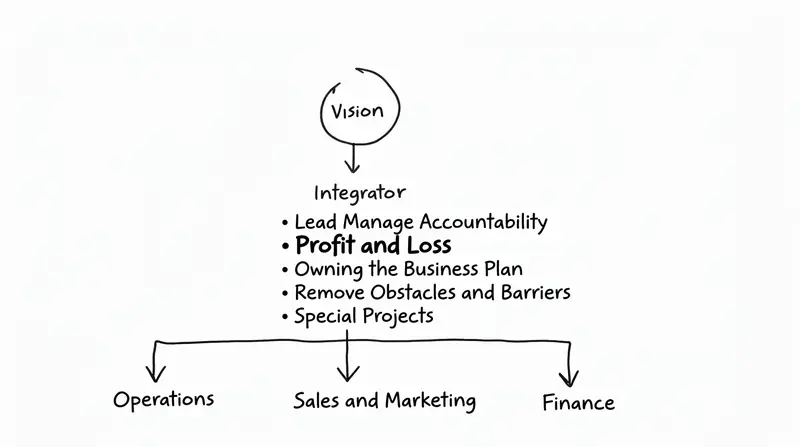
When an Integrator doesn't own the P&L, they become a project manager with a bigger title. They can coordinate, they can facilitate, but they can't truly lead. Because leadership, real operational leadership, requires the ability to make resource decisions, prioritize investments, and hold the team accountable to financial outcomes.
Without P&L ownership, the Integrator has to escalate every meaningful decision back to the Visionary. And that defeats the entire purpose of the role.
What P&L Ownership Actually Means
Owning the P&L doesn't mean the Integrator becomes the CFO. It means they have:
- Visibility into the company's financial position
- Authority to make operational spending decisions within agreed boundaries
- Accountability for hitting revenue and profit targets
- The ability to connect financial outcomes to operational decisions
This creates a fundamentally different kind of leader, one who can look at the business holistically and make trade-offs, rather than simply executing someone else's plan.
The Visionary Bottleneck Returns
When the Integrator doesn't own the P&L, the Visionary stays in the weeds. Every budget question, every hiring decision, every resource allocation comes back to them. The bottleneck that the Integrator was supposed to relieve never actually goes away.
This is one of the most common reasons Visionaries feel like the Integrator role 'isn't working.' The structure was set up to fail from the beginning.
How to Fix It
If you have an Integrator, or you're hiring one, make sure the role comes with real financial ownership from day one. Define the boundaries, set the expectations, and then let them lead.
The Integrator seat only works when it carries real authority. And real authority starts with the P&L.