 Nina
What Is EOS Rollout and Why Does It Matter?
Rolling out EOS is the process of taking the shared language, tools and processes that the leadership team have successfully adopted and sharing them with everyone in the organization.
If EOS stays at the leadership level, you end up with a well-structured leadership team sitting on top of an organization that doesn't share the same vision and alignment.
Rolling out EOS is a shift in how your business operates. It changes how decisions are made, how people are held accountable, and how leaders show up.
It's a bit of a revolution. And revolution isn't easy.
There will be a stretch where things feel uncertain. People are figuring out what EOS means for them. Some will lean in, others will hesitate and be resistant, and that tension is part of the process.
Rollout is not easy, but it's worth it.
What Has to Be True Before You Begin the Rollout?
Before considering rollout, take a candid look at your leadership team. And ask yourself:
- Are we genuinely excited about our vision?
- Are we prepared to teach these tools with authentic enthusiasm?
- Do we all fully understand the Five Foundational Tools (V/TO®, The Accountability Chart®, Rocks, The Meeting Pulse®, Scorecard) and are using them successfully as a leadership team?
- Are we approaching this rollout from a place of abundance and trust our team?
If those things aren't in place, rollout will feel like noise to the rest of the company, and it will not be successful.
Your leadership team needs to present a fully aligned and united front.
You also need to be ready to trust your team. A lot of business owners are reluctant to share openly with the team, which leads to employees making assumptions that are often far worse than the truth.
Your people are desperately waiting for you to trust them with the truth.
Once you are aligned and ready to trust the team you can start creating your rollout plan.
The Rollout Plan
There isn't a single rollout plan that works for every business.
And trying to force one usually creates more friction than progress.
The right approach depends on:
- Your culture
- The size and structure of your team
- How your people learn and adopt change
- Your track record with past initiatives
Some teams can absorb change quickly. Others need time, repetition, and context. Some need to see it working before they buy in.
What matters most is pacing.
The biggest mistake founders make is trying to roll everything out at once. It feels efficient, but it overwhelms the team and nothing sticks.
The companies that do this well take a more measured approach. They introduce EOS in layers, reinforce it consistently, and give people time to actually use it.
Think of rollout less like a one-time launch and more like a long-term project.
Decide How You're Going to Roll It Out
There is no single right way to do this, but you do need to choose an approach.
Most companies land in one of three paths:
- 1Rolling out by department
- 2Rolling out by tool (Rocks, Scorecards, L10s, etc.)
- 3A hybrid of both
The right choice depends on your size, structure, and how your teams operate day to day.
What matters more than the structure is that you stay flexible. You're going to learn as you go, and you need to be willing to adjust based on what's actually landing with your team.
Assign Real Ownership
Someone needs to own rollout.
Who is your internal Rollout Champion?
Who is making sure this moves forward when things get busy? Who is holding the leadership team accountable to staying consistent?
If this is unclear, rollout will stall the moment something more urgent comes up.
Oftentimes, this will be the Integrator.
Plan Your Communication Upfront
Most of the friction in rollout comes from confusion, not resistance.
People are asking:
- Why are we doing this?
- What does this mean for me?
- Is this actually going to stick, or is this another initiative?
You need to answer those questions before they're asked.
That means being intentional about:
- How you introduce EOS
- How often you repeat it
- How visible it is in day-to-day work
People need to hear things multiple times, in different ways, before it actually clicks.
Keep It Simple and Stay Adaptable
The biggest mistake I see is founders trying to design the perfect rollout plan upfront.
You don't need perfect. You need clear, simple, and consistent. And you need to adjust quickly when things are not working.
The Step-by-Step Process
In practice, rollout tends to follow a clear progression.
1. Start With the Vision
Before anything else, your team needs to understand where the company is going and why.
This is where you introduce EOS and share the vision in a way that people can actually connect to. Not just reading through a V/TO, but helping people see where they fit.
People should walk away understanding:
- What we're building
- Why it matters
- How their role contributes
The more this feels like a conversation instead of a presentation, the better it lands.
2. Reinforce It Consistently
This is where most companies fall short.
They share the vision once and assume it's understood.
It's not. Clarity comes from repetition. This is where company-wide quarterly meetings (or all-hands) become critical. You're revisiting the vision, sharing progress, talking about what's working and what's not, and resetting priorities.
It may feel repetitive to you. To your team, it creates alignment.
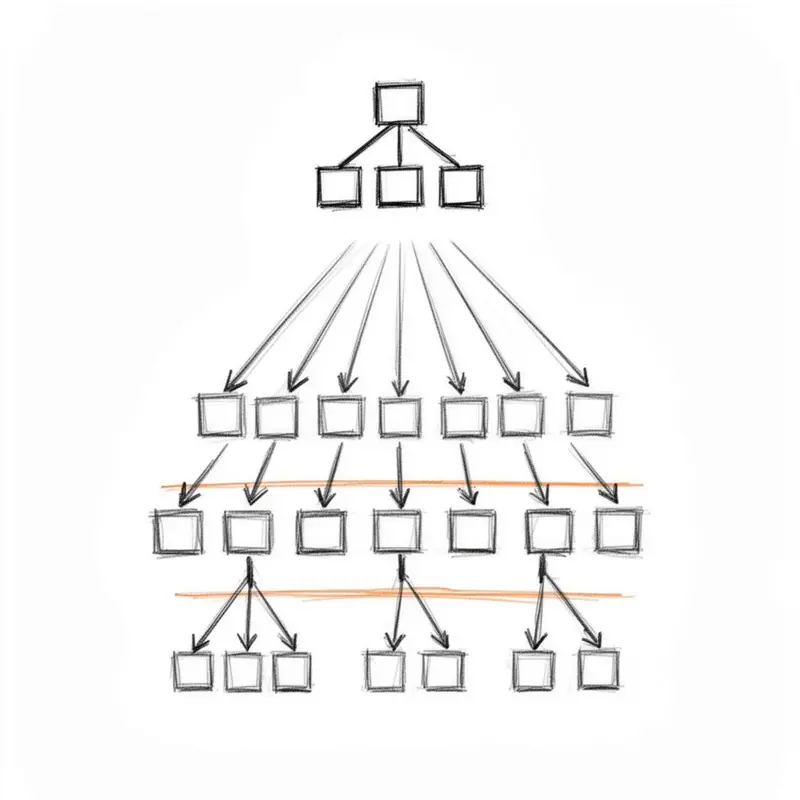
3. Roll Out the Tools, Layer by Layer
Once the vision is understood, you start bringing the tools into the organization.
This doesn't happen all at once. It happens one layer at a time through the Accountability Chart.
Leadership teams have already been using Rocks, Scorecards, and L10s. Now those tools get translated into departments, and then into the next level down.
Each layer needs to:
- Understand the tools
- Adapt them to their function
- Actually use them consistently
For example:
- Each department builds its own Scorecard
- Teams set Rocks that align to company priorities
- Managers run structured weekly meetings
4. Let It Take Hold Through Behaviour
Tools don't change a business. Behavior does. This is where consistency matters most.
Leaders need to:
- Hold people accountable
- Follow through on priorities
- Stick to the meeting cadence
- Address issues instead of working around them
This is also where resistance tends to show up, because it's different from how things used to work. But if you stay steady here, the system starts to take hold.
Final Thought
Rolling out EOS is one of the most important transitions you'll lead as a founder. It won't feel perfect. There will be a stretch where things feel slow, hard, and like it's never going to work.
That's part of it. If you stay consistent, keep reinforcing the vision, and give your team time to adopt it properly, the payoff will come.
If you want help developing your rollout plan, reach out.