 Nina
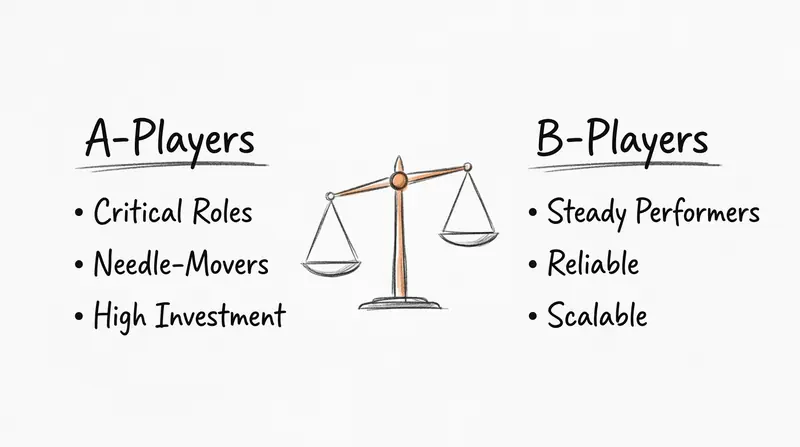
When to Invest in A-Players and When B-Players Shine
This weekend I was chatting with a friend who just finished reading the book "No Rules Rules: Netflix and the Culture of Reinvention". My friend, the COO of a growing tech company, shared that she enjoyed the book and that the advice given was great in theory, but oftentimes much harder to apply in practice.
For example, the book championed the idea of hiring only top performers (AKA A-players) to build a culture of freedom and responsibility. In theory, a great idea, however, hiring A-players is not always feasible as they come with high salary and growth expectations.
This got me thinking because at the end of the day who you have on your team can make or break the company. Steve Jobs famously said 'A-players attract A-players. B-players attract C-players.' It's a compelling perspective, but let's unpack why it does not necessarily have to be that way in practice.
Defining an A-Player
What even is an A-player? I've found it's a term often thrown around but rarely clearly defined within companies.
At a high level, an A-Player is someone who consistently excels in their field, demonstrating top-tier performance and expertise. They not only meet but often exceed expectations, bringing innovation, drive, and transformative impact to their roles.
But something very important to remember is that the definition of an A-player isn't universal. What one company views as an A-player might be seen as a B-player in another. It's a dynamic label, heavily influenced by a company's culture, values, and specific needs.
Therefore, before making any hiring decisions, it is absolutely vital to properly define what is needed within each role given the current state of the business.
When Should You Hire an A-Player?
There are a couple of key reasons why hiring only A-players is not always feasible or the most practical approach:
- 1A-players, with their stellar reputations, often come with equally stellar salary expectations. Their expertise doesn't come cheap and even if there is a clear long-term ROI on their role, if there is not enough cash flow in the business it simply isn't possible.
- 1A-players are in high demand which often means they're frequently sought out by other companies. By nature, A-players want to grow and progress and will seek out opportunities in line with that. If you can't promise continuous progress you will likely have a high turnover rate.
With that in mind, there are times when the investment in an A-player is absolutely vital and that is when it comes to critical strategy and operations elements.
One example of a critical objective is financing for a pre-revenue business. In this scenario hiring an A-player, someone who has been there and done it before, has the right connections and skills will be a real game changer.
So my advice is to always hire A-players for needle-moving, critical objectives. For everything else, you can build a great business by hiring B-players.
Striking the Right Balance
B-players are competent and steady performers. They may get a bad rep and be disregarded in some business books but in reality, they can be great team members. They are consistent and reliable long-term performers who look for work-life balance.
While A-players bring undeniable value, evaluating when and where they fit into your business is essential. With the right training, feedback and culture your B players can rise up and be amazing assets to the A-player strategists.
Building a team with a blend of A and B players in line with the critical strategic objectives of the business and what you can afford is the recipe for success.